
The Supreme Court's ruling in the BPSL case exposes deep flaws in the IBC's institutional framework and raises concern about judicial overreach, notes Rajeswari Sengupta.

Sri Lankan players currently touring Pakistan for a three-match ODI series want to return home due to security concerns following a deadly suicide attack in Islamabad but PCB chief Mohsin Naqvi claimed that the rubber will continue, albeit with a rejigged schedule.

Justice Surya Kant is set to become the 53rd Chief Justice of India, bringing extensive experience and a record of significant verdicts on key issues.

State Department Spokesperson Tammy Bruce Sunday said, "President Trump stated clearly that the United States is no longer going to blindly dole out money with no return for the American people. Reviewing and realigning foreign assistance on behalf of hardworking taxpayers is not just the right thing to do, it is a moral imperative."

Former Union Law Minister Ashwani Kumar has argued for replacing the existing collegium system for judicial appointments, asserting that public sentiment leans toward an alternative mechanism, potentially resembling the National Judicial Appointments Commission (NJAC). He believes that the government has the authority to propose a revised constitutional amendment for judicial appointments that would withstand judicial scrutiny. Kumar also urged the Supreme Court to establish a robust internal process to address concerns within the judiciary, including allegations against judges.

The Supreme Court of India has ruled that governors cannot indefinitely delay giving assent to bills passed by state legislatures, setting a timeline of one to three months for their actions. The court said the governor must act "as soon as possible" and that failure to comply with the timeline will make their inaction subject to judicial review. The ruling comes as several opposition-ruled states have accused governors of delaying assent to bills passed by their assemblies.

While the new income tax law replaces the Income Tax Act, 1961 and omits 13 offences, 35 actions and omissions continue to attract criminal liability under 13 provisions.

The Indian government has expressed its disagreement with the IMF staff's 'baseline' assumption that the 50 per cent US tariffs on its goods exports 'would remain in place indefinitely', based on which the staff pegged the country's GDP growth at 6.6 per cent this year, and pared its 2026-27 projection by 20 basis points to 6.2 per cent.

Zubeen Garg's cousin and Assam Police DSP Sandipan Garg was apprehended on Wednesday in connection with the singer's death in Singapore last month, taking the total number of arrests in the case to five, a senior officer said.
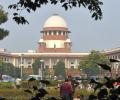
A Constitution bench comprising Chief Justice B R Gavai and Justices Surya Kant, Vikram Nath, P S Narasimha and A S Chandurkar, would fix the timelines on July 29 and commence hearing on the presidential reference in mid-August.

A Delhi court has allowed Tahawwur Hussain Rana, accused in the 26/11 Mumbai attacks, to have three phone calls with his brother to discuss engaging a private counsel. His judicial custody has been extended until September 8.

The Securities and Exchange Board of India (Sebi) has identified around Rs 77,800 crore as "difficult-to-recover" or DTR dues in its annual report for 2024-25 (FY26), marking a nearly 2 per cent increase from the previous year. These dues remain unrecovered despite exhaustive recovery efforts.

'You cannot 'clear' your way to peace.' 'You need intelligence, calibrated force, impartial law enforcement, political neutrality, humanitarian returns and a sustained reconciliation plan.'
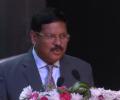
"The moment we let technology take the driver's seat in the legal system, we begin to erode the public's faith in us and with it, the foundations of the rule of law," CJI Gavai added.

'I want to ask the entire nation and the opposition. Can a Chief Minister, Prime Minister, or any leader run the country from jail?'

In a landmark verdict, the Supreme court fixed a timeline for Governor to act on bills passed by the state legislature as it pulled up Tamil Nadu Governor R N Ravi for reserving 10 bills for President's consideration, saying it was against the constitutional provisions.

The Indian government defended its decision to revoke the security clearance of Turkey-based Celebi without warning, citing an "unprecedented" threat to aviation security. Solicitor General Tushar Mehta argued that giving a hearing or reasons before taking action would "defeat the purpose" in matters of national security. The decision came after Turkey backed Pakistan and condemned India's airstrikes on terror camps in the neighboring country. Celebi, which operates at nine Indian airports, has challenged the government's move in court.
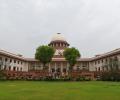
The Indian government has defended the Waqf (Amendment) Act, 2025 in the Supreme Court, arguing that there cannot be a blanket stay on the law as there is a presumption of its constitutionality. The Centre countered the pleas challenging the law's validity, asserting that the amendments were undertaken after a comprehensive study by a parliamentary panel. The government also highlighted the "reported misuse" of earlier provisions and the increase in waqf land, claiming that over 20 lakh hectares were added after 2013.
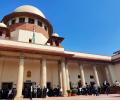
The bench said the ED officers acting under the Section 19(1) of the Prevention of Money Laundering Act (PMLA) cannot ignore or not consider the material which exonerates the arrestee.
The views came in the wake of Vice President Jagdeep Dhankhar wondering on Friday that how could the CJI, even by "statutory prescription", get involved in executive appointments such as that of Central Bureau of Investigation director, and said it was time to "revisit" such norms.

President Droupadi Murmu has exercised powers under Article 143(1) used in rarity to know from the Supreme Court whether timelines could be imposed by judicial orders for exercise of discretion by President while dealing with the bills passed by state assemblies.

Climate activist Sonam Wangchuk was arrested Friday by a police party in Leh, two days after violent protests by supporters of the movement for statehood and extension of Sixth Schedule of Constitution left four persons dead and 90 others injured, officials said.
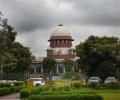
The Supreme Court has ordered the release of Sukhdev Yadav, convicted in the 2002 Nitish Katara murder case, citing completion of his 20-year sentence. The court questioned the Sentence Review Board's rejection of his remission plea.

The Roshans is somewhat like leafing through a glossy coffee table book full of trivia -- no depth, but such a shiny collection of memories, observes Deepa Gahlot.
Some of his directives had the Supreme Court judges disclose their assets whereas the row over the discovery of cash from a sitting judge's official residence paved way for inquiry.
Vice President Jagdeep Dhankhar has questioned the Chief Justice of India's involvement in executive appointments, specifically citing the selection of the CBI director. He believes this practice undermines democratic principles and calls for revisiting the existing norms. Dhankhar also raised concerns about the "doctrine of basic structure", suggesting it has a debatable jurisprudential basis. He emphasized the importance of each institution operating within its constitutional boundaries and highlighted the need for coordinated autonomy. The vice president also discussed the need for a balanced approach to judicial review and the importance of judges focusing on judgments rather than other forms of expression. He stressed the need to revisit the current state of affairs to restore the judiciary's sublimity.

It referred to Article 105 of the Constitution which deals with powers, privileges etc, of the Houses of Parliament and of the members and committees thereof.

Ramesh said the current limit of 50 percent is not explicitly mandated by the Constitution, but has been decided through various Supreme Court decisions.

Vice President Dhankar's and Law Minister Rijuju's recent interventions have the danger of destabilising the Constitutional equilibrium, cautions N Sathiya Moorthy.

'...so cases that arose under the existing Act will be adjudicated under the old provisions.' 'Care has been taken to ensure that the new I-T Act does not give rise to interpretational issues.'

If the TVK joins the NDA, there is every likelihood of the AIADMK winning an absolute majority in the 234 seat assembly and wanting to form a stand-alone government. In turn, it could mean that the BJP especially and the TVK equally so, will want to restrict the AIADMK's seat share closer to the cut-off figure, if only to ensure that EPS won't get the absolute majority that he desires (if the NDA won, that is) and will have to settle for a coalition government, observes N Sathiya Moorthy.

Underscoring the 'presumption of constitutionality in favour of law', the Supreme Court on Tuesday said petitioners challenging the waqf law needed a 'strong and glaring' case for interim relief.

Does voter deletion controversy expose critical gaps in ECI verification procedures and safeguards protecting electoral roll integrity?
A bench of justices Sanjiv Khanna and Dipankar Datta, which granted interim bail to Delhi Chief Minister Arvind Kejriwal in the money laundering case linked to alleged excise policy scam, said section 19 of the PMLA, which gives power to arrest, puts stringent safeguards to protect life and liberty of individuals.
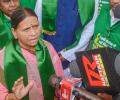
Bihar Chief Minister Nitish Kumar engaged in a heated exchange with Leader of the Opposition Rabri Devi in the Legislative Council, dismissing her as "inconsequential" without her husband, RJD president Lalu Prasad. The spat stemmed from RJD MLCs wearing badges promoting quota hikes passed during Tejashwi Yadav's tenure as Deputy CM, which Nitish Kumar perceived as an attempt to claim credit for the populist move. Kumar also remarked that Rabri Devi was only propped up by her husband when he was in trouble, referring to her becoming Chief Minister in 1997 while Lalu Prasad faced corruption charges. The war of words between the two rivals has intensified, with the RJD accusing Kumar of losing his mental balance and being unfit to rule.
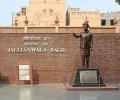
Former Supreme Court judge Justice Rohinton Nariman has warned that events similar to the Jallianwala Bagh massacre could occur if the 'basic structure' doctrine of the Constitution is diluted. In his new book, 'The Basic Structure Doctrine: Protector of Constitutional Integrity,' Nariman argues that the 1973 Kesavananda Bharati judgment, which established the doctrine, is essential for protecting fundamental rights and preventing constitutional amendments that could lead to such tragedies. Nariman's concerns are echoed by Supreme Court judge Justice K V Viswanathan, who applauds the book for its "chilling clarity" and underscores the importance of the Kesavananda Bharati ruling. The book provides a detailed analysis of the doctrine and its implications, highlighting the robustness of the Kesavananda Bharati judgment and the lack of a compelling alternative theory.
The Supreme Court of India has overturned an order by the National Green Tribunal (NGT) that halted construction activities at Auroville in Chennai. The court emphasized the need for a "golden balance" between the right to development and the right to a clean environment, upholding the principle of sustainable development. The decision comes as a victory for the Auroville Foundation, which had challenged the NGT order, and highlights the ongoing debate about balancing environmental concerns with economic growth in India.
A bench comprising justices J B Pardiwala and R Mahadevan on April 8 gave a huge relief to the Dravida Munnetra Kazhagam-led Tamil Nadu government and cleared 10 state bills which were stalled and reserved by Governor R N Ravi for President's consideration, and also set a timeline for all governors to act on the bills passed by state assemblies.
In a significant development, the Supreme Court on Tuesday asked the Election Commission of India to provide details of cases in which it had either removed or reduced the period of disqualification from electoral rolls of leaders post their conviction in criminal cases.
The Supreme Court is hearing arguments regarding a presidential reference on whether fixed timelines can be imposed on governors and the president for acting on bills passed by state legislatures. The court is considering objections to the maintainability of the reference under Article 143 of the Constitution.
